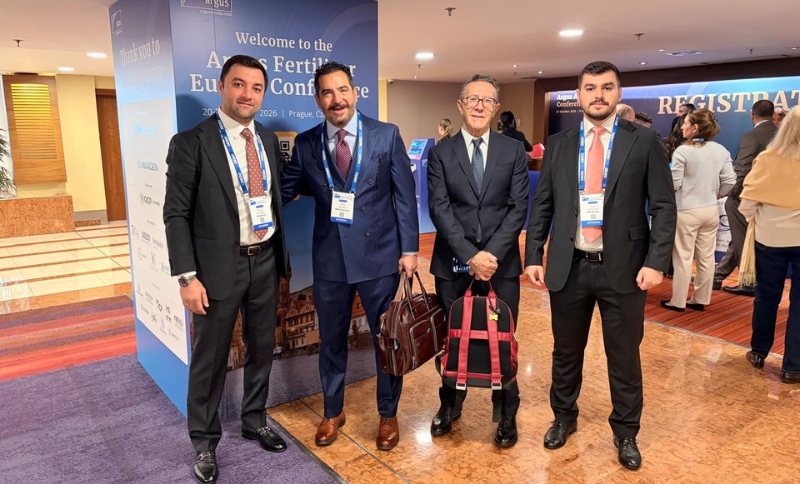
Alkagesta said in a company press release that it attended the Argus Fertilizer Europe Conference in Prague on 20–22 October 2026. Fertilizer Desk Lead Vusal Muradov and Fertilizer Trader Tural Sabirzade represented the business during the three-day event. The release described a programme centred on carbon borders and trade, bringing together fertilizer producers, trading companies, importers and policymakers to discuss changes affecting the European industry.
According to Alkagesta’s account, the opening programme examined regulatory developments, including the Carbon Border Adjustment Mechanism, the EU Emissions Trading System and tariff reform. Discussions considered how those measures could affect fertilizer prices, the movement of products between markets and decisions on supply chain planning. Regulation was therefore presented alongside commercial and logistical questions, rather than as a separate issue for the sector.
The first day of the main conference turned to the competitive position of Europe’s fertilizer industry against a changing geopolitical backdrop. Alkagesta said sessions explored the structural effects of interrupted supplies, fluctuating energy prices and changes in sourcing. The programme also covered shipping, the resilience of supply chains and expectations for natural gas, linking the discussion of market competitiveness with the operating conditions facing fertilizer traders.
The following day included specialty and bio-organic fertilizers, alongside end-user views on food security and farm economics. Clean ammonia also featured, with the programme considering its potential role in responding to energy-related and geopolitical risks. According to the release, the closing agricultural market assessment examined how the Middle East conflict was affecting planting seasons and yields, against wider pressures on global energy and commodity supplies during 2026.
Alkagesta characterised its attendance as an opportunity to engage with market participants and policymakers and develop relationships supporting its European fertilizer trading business. That assessment reflects the company’s own account of its participation.